+44 (028) 9042 1188 | info@theheadacheandmigrainecentre.com


Patient Journey
If you are unsure if assessment and treatment with us is indicated for your presentation than a Discovery Call can be arranged where one of our practitioners will ask you about your symptoms. Based on information collected during the call if your headache or migraine sounds suitable for treatment with our techniques, an appointment can be arranged. After that a typical patient journey looks something like what follows.

Initial Assessment
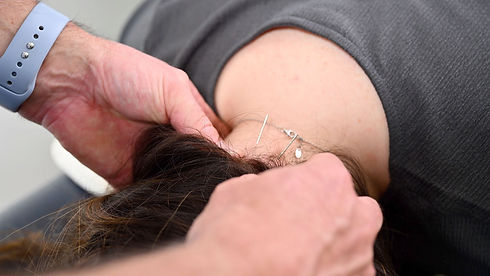
Your first visit is a 60‑minute assessment. We take a clear history, run appropriate screening, and examine your upper neck using the Watson Headache® Approach. If your neck is part of the problem, treatment begins in the first session. If it isn’t, we’ll discuss other options or liaise with your medical team. During assessment we look for comparable signs that your upper neck is contributing to your presentation. Amongst many things, this usually involves ‘Reproducing’ your familiar head pain, which then ‘Resolves’ in response to sustained, gentle pressure to the involved spinal segments. This points to a treatable neck driver and guides your plan.
Early treatment (Weeks 1–5)
Most people start with a course of six sessions. Follow‑up is usually 3–4 days after your first visit, then spaced according to your response and episode pattern. Hands‑on treatment is paired with a few targeted exercises and practical routines. After six sessions most people feel clear improvement. We are usually more able to set a realistic prognosis and plan any extra care for remaining symptoms. We track change in monthly migraine days, intensity, rescue‑medication use and function. We also use validated outcome measure questionnaires at the beginning of treatment to reliably track change over time.

Consolidation (Weeks 5+)
As symptoms ease, sessions are spaced out. We progress exercise, build load‑tolerance and refine self‑management, often with progressive exposure to previously aggravating factors and known triggers. Many complete this stage with no remaining symptoms. When other non-mechanical or neurological issues are present, we still expect meaningful improvement, within what manual therapy can achieve. Where relevant, we coordinate with your Neurologist or GP regarding medication plans so non‑drug care and medical care support each other.
Self‑Management
Ongoing, tailored exercises help you self-manage to stay largely headache and migraine free. From time to time, life events like illness, injury or stress may lower your threshold, triggering a recurrence of episodes. If headache recurs months or years later, a shorter course usually helps you regain control.
Safety and Scope
We screen for red flags and only treat within scope. When needed, we’ll refer or co‑manage with your Neurologist, Medical Specialist, or GP.
